Cart 0
Cart 0


Assay-Ready iPSC-Derived
DM1 Skeletal Muscle Myoblasts

Powering Translational Research with Patient Specific Human Myoblasts and CRISPR Corrected Isogenic Control
iPSC-Skeletal Muscle Line Genetic Mutation Clinical Disease Price
DM1-716
(Disease)
35 y.o. male
CTG trinucleotide repeat expansion in 3′ UTR of DMPK
716 CTG repeats (~2,100 nt)
Myotonic Dystrophy Type 1 $3,295
6 million cells
$5,995
12 million cells
*10 day supply of media included
DM1-473
(Disease)
18 y.o. male
CTG trinucleotide repeat expansion in 3′ UTR of DMPK
473 CTG repeats (~1,500 nt)
Myotonic Dystrophy Type 1
DM1-0
(Isogenic Control)
0 CTG repeats (CRISPR-corrected) · WGS confirmed Isogenic control to DM1-716
24-WT
(Unrelated Wild-Type)
Normal CTG repeat length Healthy reference control $2,550
6 million cells
$4,750
12 million cells
*10 day supply of media included
💡 Bundle & Save: Full 4-line bundles available. Contact us for volume pricing.
curi-bio-gradient.png
 

Enabling DM1 Therapeutic Discovery

Myotonic Dystrophy Type 1 (DM1) is the leading cause of adult-onset muscular dystrophy and a pervasive, multi-systemic disorder. Characterized by progressive muscle wasting, myotonia, and life-threatening cardiac complications, symptoms typically emerge in early adulthood and worsen over time. Despite its profound and life-altering impact, there is currently no cure for this degenerative condition.

DM1 is caused by an unstable expansion of CTG trinucleotide repeats in the 3′ UTR of the DMPK gene on chromosome 19. The expanded DMPK transcript forms toxic RNA foci that accumulate in the nucleus and sequester critical RNA-binding proteins, particularly Muscleblind-like splicing regulators (MBNL1/2). This triggers widespread splicing dysregulation across hundreds of transcripts, contributing to nearly all aspects of DM1 pathology.

Validated Phenotypes, Clinical Relevance

DM1 myoblasts recapitulate hallmark molecular and cellular features of DM1 disease, providing a biologically relevant platform for target validation and therapeutic testing. The model includes two patient-derived lines spanning a range of CTG repeat lengths (DM1-473 and DM1-716), one CRISPR-corrected isogenic control (DM1-0), and one unrelated wild-type line (24-WT). This enables precise dose-response profiling and ensures that every insight is rooted in disease biology, not genetic noise.


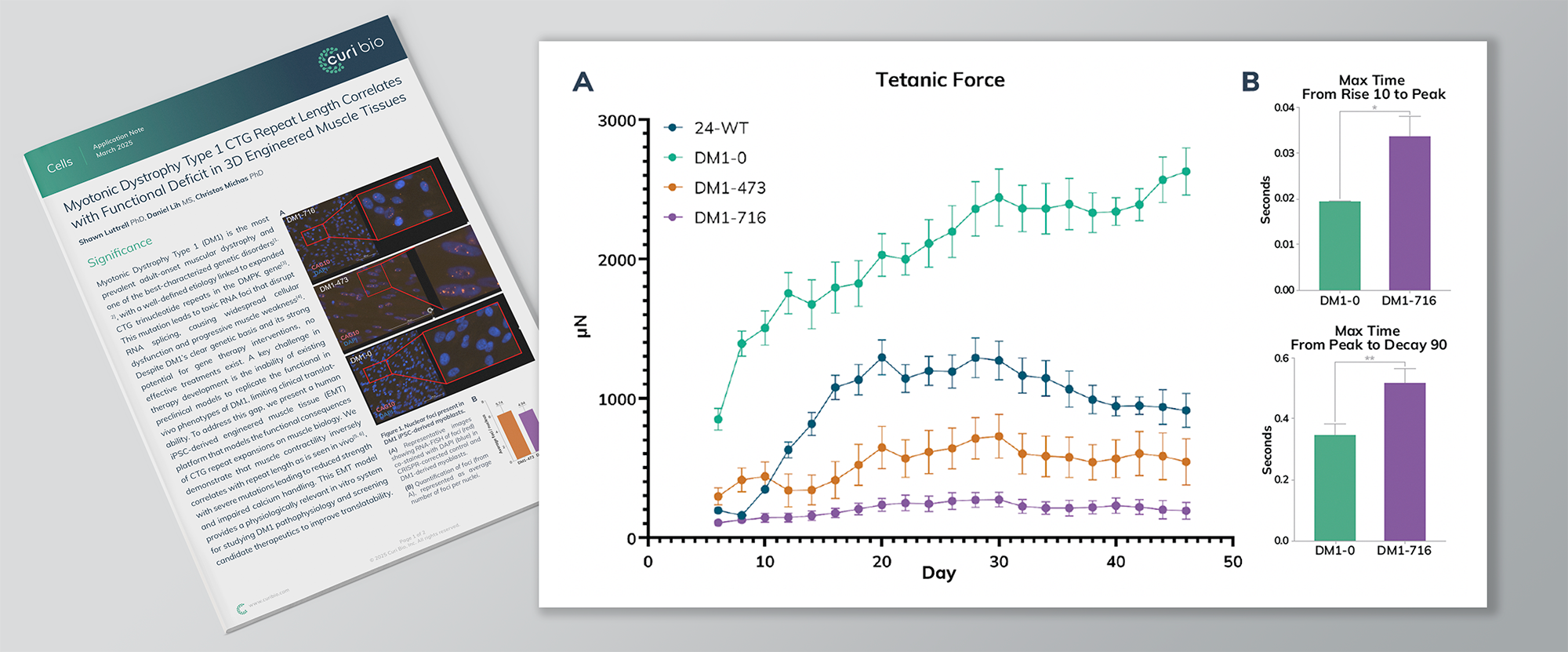
Contractile Force Inversely Correlates with CTG Repeat Length. Longitudinal functional analysis in engineered muscle tissues over 46 days reveals that contractile strength diminishes with increasing CTG repeat length, recapitulating the progressive muscle weakness seen in DM1 patients.

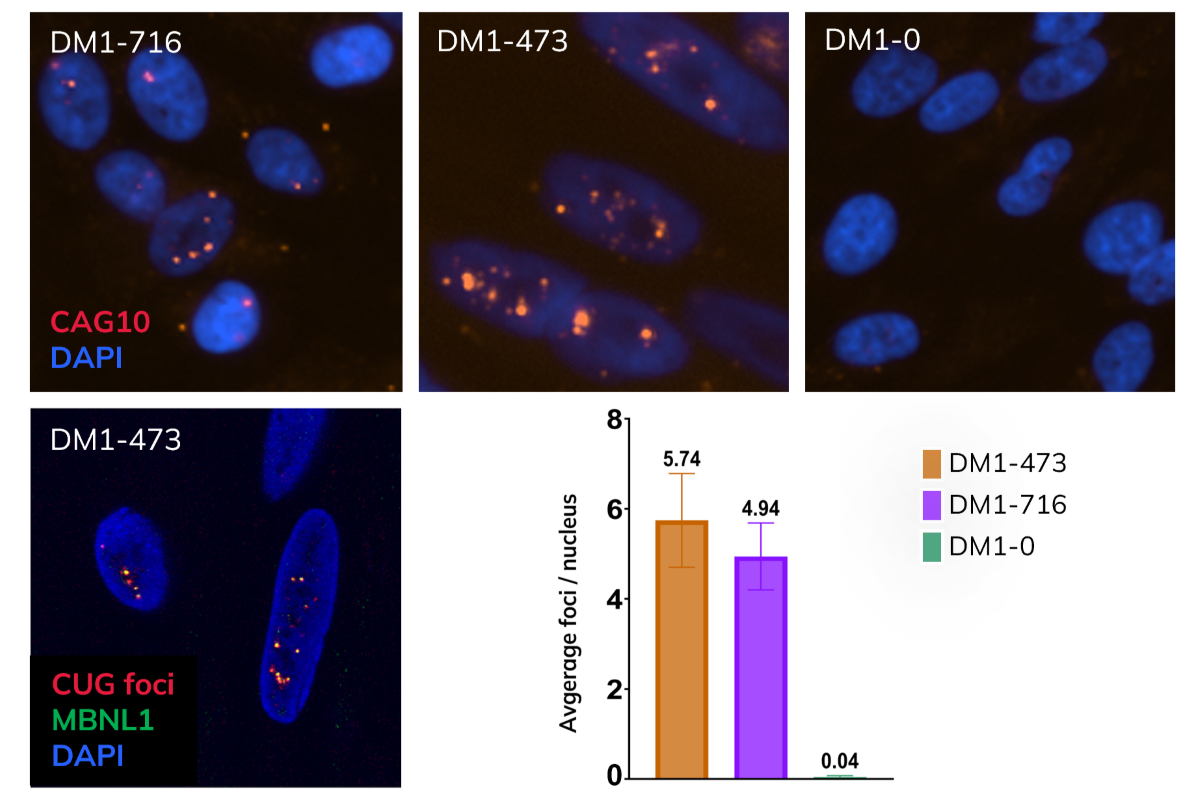
Toxic RNA Foci and Protein Sequestration in DM1 Patient Lines. Both patient-derived lines exhibit numerous RNA foci that are shown to bind and sequester Muscleblind-like splicing regulator 1 (MBNL1) in DM1-473. In contrast, isogenic correction in the DM1-0 line results in a nearly complete elimination of these toxic aggregates.


Contractile Kinetics of Engineered Muscle Tissues. Both DM1 patient lines exhibit prolonged relaxation compared to healthy and isogenic control tissues, indicative of nascent myotonia.

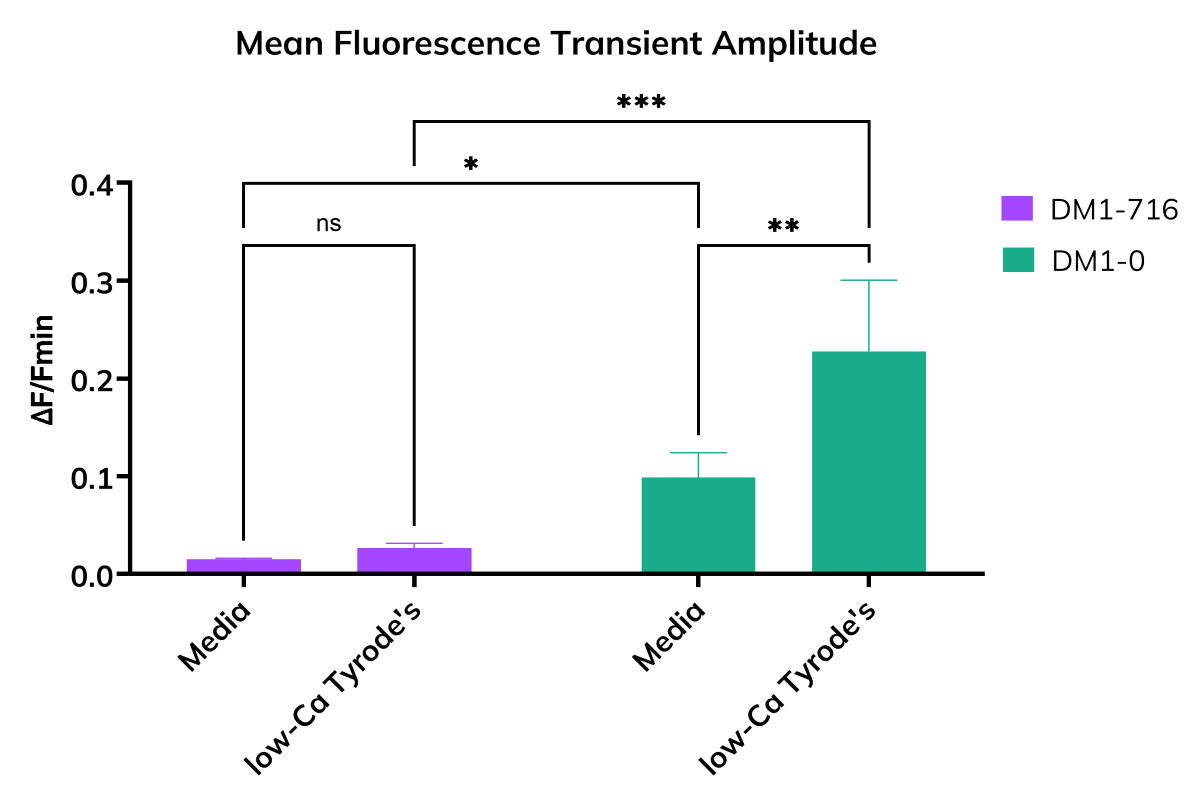
Heightened Calcium Handling Deficits in DM1 Tissues Under Ionic Stress. While DM1-716 tissues show reduced calcium flux in standard media, the impairment is significantly more pronounced in low-calcium Tyrode's solution. The isogenic control shows a robust compensatory increase in transient amplitude that is blunted in the DM1 patient line.


 More DM1 Resources


Begin Your DM1 Research Today

With the DM1 Skeletal Muscle Model, you gain the industry's only commercially available isogenic iPSC-derived DM1 model — fully validated, assay-ready, and backed by expert scientific support.

  • Genetic Precision: CRISPR/Cas9 isogenic control with WGS-confirmed 0 CTG repeats eliminates background genetic variation for high-confidence results.

  • Biological Accuracy: 3D Engineered Muscle Tissues (EMTs) recapitulate hallmark DM1 phenotypes including force deficits, prolonged relaxation, and impaired calcium handling over a 46-day window.

  • Translational Framework: CTG repeat-stratified model enables dose-response profiling of disease severity, supporting target validation, lead optimization, and compound screening for DM1 therapeutics.

Request a quote today or speak to a specialist to integrate the DM1 model into your research workflow.

Request a Quote to Order Speak with an Expert