Cart 0
Cart 0
 

X-Linked Myotubular Myopathy (XLMTM)

Assay-ready 3D Human Engineered Muscle Tissue for XLMTM Therapeutic Discovery

Skeletal Muscle Line Genetic Mutation Clinical Disease
CB-SKM-XLMTM
(Disease)
Patient-derived · fibroblast, male donor
MTM1 missense mutation
X-Linked Myotubular Myopathy

*Cells are for research use only. Not for use in diagnostic procedures.

💡 Special Pricing: Available for first-time orders. Contact us for academic and bulk volume pricing.
 
curi-bio-gradient.png
 

Enabling XLMTM Therapeutic Discovery

X-linked myotubular myopathy (XLMTM) is a rare, severe congenital myopathy caused by mutations in the MTM1 gene, which encodes the lipid phosphatase myotubularin. Affecting primarily males, it causes profound muscle weakness and hypotonia from birth, often with respiratory failure, and there are currently no approved disease-modifying therapies.


Recapitulating Disease Hallmarks in 3D Human Muscle

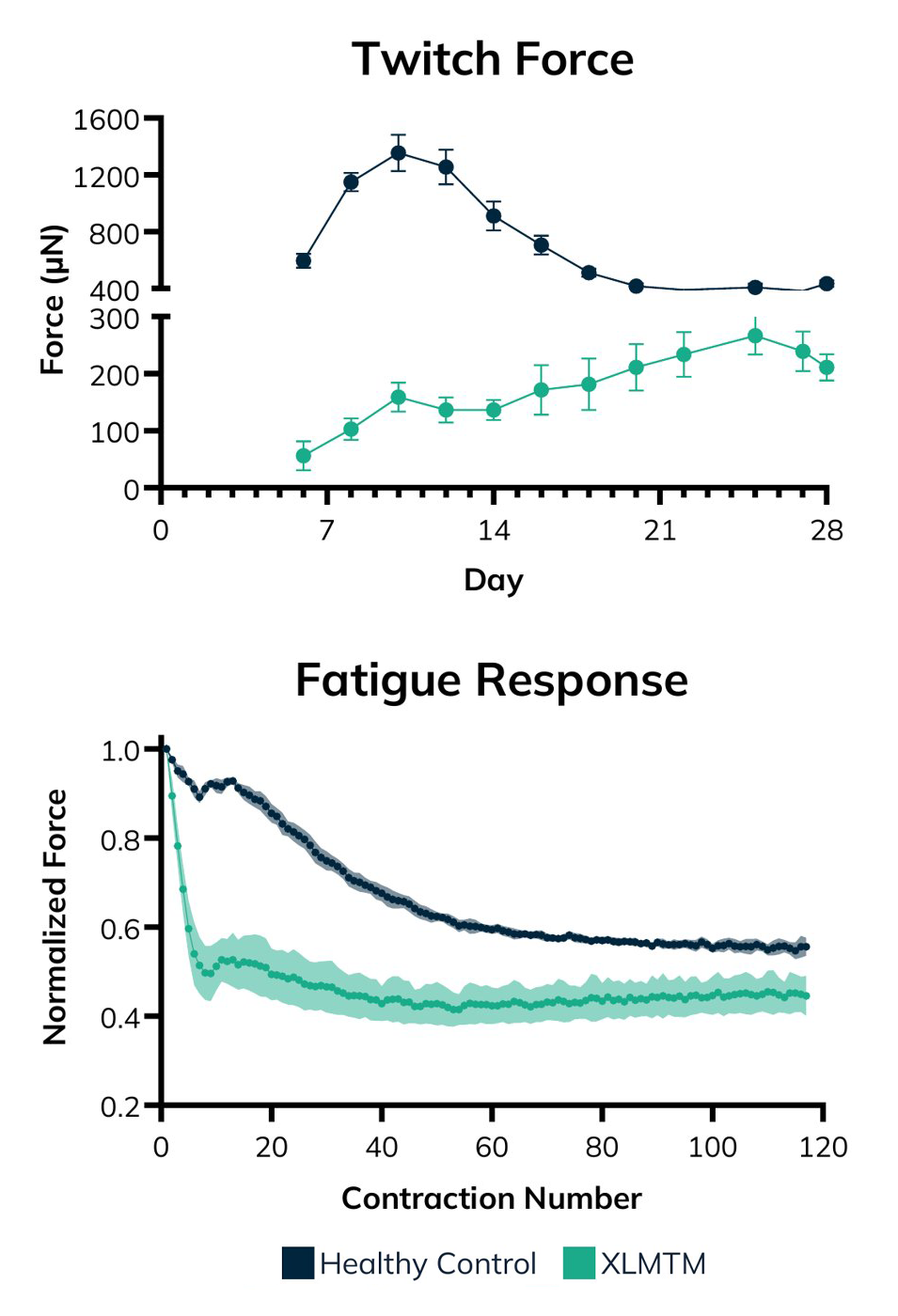
XLMTM engineered muscle tissues (EMTs) recapitulate hallmark structural and functional features of the disease. Aligned tissues suspended between a rigid and a flexible post on Mantarray™ report contractile force longitudinally and label-free, so you can track disease phenotypes and therapeutic response in the same tissues over time.


Impaired Force and Exacerbated Fatigue

XLMTM EMTs generate substantially lower twitch force than controls across 28 days. Under repeated stimulation, force drops sharply within the first 10 contractions and plateaus below controls.

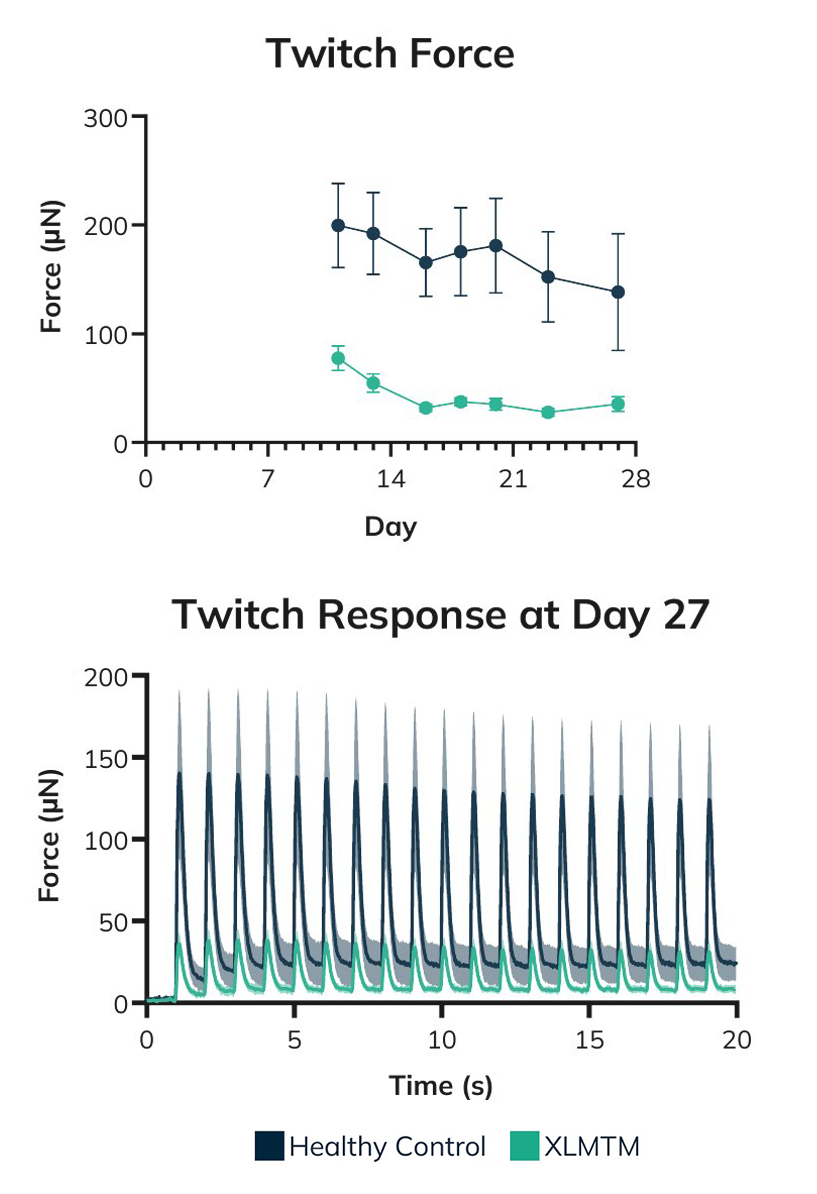
Retained Phenotype in 96-Well Plates

XLMTM EMTs in 96-Well 3D Tissue Plates generate roughly 2.5- to 5-fold lower twitch force than healthy controls, with distinct, repeatable twitches at day 27.


Begin Your XLMTM Research Today

With Curi Bio's XLMTM 3D Human Engineered Muscle Tissue Model, you gain an assay-ready, human-relevant system for XLMTM therapeutic discovery, backed by expert scientific support.

  • Biological accuracy: 3D EMTs recapitulate hallmark XLMTM phenotypes, including centronuclear morphology, impaired twitch force and exacerbated fatigue.

  • Longitudinal, label-free readouts: Measure contractile force in the same tissues over time on Mantarray™ to track disease progression and therapeutic response.

  • Screening-ready scale: 96-Well 3D Tissue Plates retain the disease phenotype while expanding the number of candidates and doses you can test per experiment.

Request a quote today or speak to a specialist to integrate the XLMTM model into your workflow.